
BIS Certification for Asbestos Cement Building Boards IS 2098: 1997
Asbestos cement building boards are robust and versatile construction materials used in a wide range of applications, including partitioning, cladding, false ceilings, and roofing. Comprising a combination of asbestos fibers and cement, these boards are known for their excellent thermal insulation, fire resistance, and durability.
Lightweight and easy to handle, asbestos cement building boards are ideal for both residential and commercial construction projects. Their smooth and paintable surface allows for aesthetic finishes, while their resistance to moisture and weathering ensures long-term performance in diverse environments.
The Asbestos or Fibre Cement Based Products (Quality Control) Order, 2024, issued by the Ministry of Commerce and Industry (Department for Promotion of Industry and Internal Trade), mandates that all manufacturers of asbestos cement building boards must obtain BIS certification (ISI Mark). This certification, as per Indian Standard IS 2098:1997, ensures the product meets stringent quality parameters, including mechanical strength, dimensional accuracy, and durability under varying environmental conditions. The certification process involves comprehensive testing and factory inspections to verify compliance with these standards. Any non-compliance with this order can result in penalties under the Bureau of Indian Standards Act, 2016, making BIS certification crucial for lawful manufacturing and marketing in India.
Why is BIS Certification Necessary for Asbestos Cement Building Boards?
BIS certification is essential for ensuring the quality, safety, and performance of asbestos cement building boards. As per IS 2098:1997, these boards must meet specific requirements, such as resistance to fire, water, and mechanical stresses, to ensure their reliability in construction projects. The Asbestos or Fibre Cement Based Products (Quality Control) Order, 2024, enforces mandatory certification to prevent substandard products from entering the Indian market, thereby protecting consumers and promoting safe construction practices. Additionally, BIS certification builds trust among buyers by validating the quality of the product and ensuring adherence to industry standards. Manufacturers who fail to comply with this order are subject to legal penalties under the Bureau of Indian Standards Act, 2016, underscoring the significance of certification for market access and consumer safety.
Overview of Indian Standard IS 2098:1997
The Indian Standard IS 2098:1997 lays down
the specifications for asbestos cement
building boards, covering essential parameters such as dimensions, physical
properties, and performance criteria. The standard specifies requirements for
thickness, mechanical strength, and resistance to fire and moisture, ensuring
the boards are suitable for various structural and decorative applications.
Testing methods outlined in the standard include evaluations for flexural
strength, dimensional stability, and surface finish. Compliance with IS
2098:1997 is mandatory for manufacturers under the Asbestos or Fibre Cement Based Products (Quality Control) Order, 2024,
as part of the BIS certification process. This ensures that only high-quality
asbestos cement building boards are available in the Indian market, promoting
safety and durability in construction practices.
Process for BIS Certification
The BIS
certification process for Asbestos Cement Building Boards involves multiple
steps, designed to thoroughly evaluate a product's compliance with the required
standards. Here is a general overview of the certification process:
1. Application Submission: Manufacturers
must submit an application form along with required documentation to BIS.
2. Documentation Review: BIS reviews the
submitted documents to ensure completeness and correctness.
3. Factory Inspection: BIS officials
conduct an on-site inspection of the manufacturing facility to assess the
production process and quality control measures.
4. Sample Testing: Product samples are
taken and tested in BIS-approved laboratories to verify compliance with Indian
standards.
5. Certification Grant: Upon successful
completion of the inspection and testing, BIS grants certification, allowing
the manufacturer to use the BIS mark on their products.

Documents Required for BIS Certification
To apply for BIS certification, manufacturers need to submit the following documents:
● Application form
● Manufacturing process details
● Quality control plan
● Test reports from BIS-approved laboratories
● Factory layout and equipment details
● Proof of business registration
● Product specifications and technical details
● Declaration of conformity to Indian standards
Additionally, manufacturers may be required to provide proof of compliance with environmental and safety regulations, depending on the specific type of product being certified.
BIS ISI Mark Certification Costing And Timeline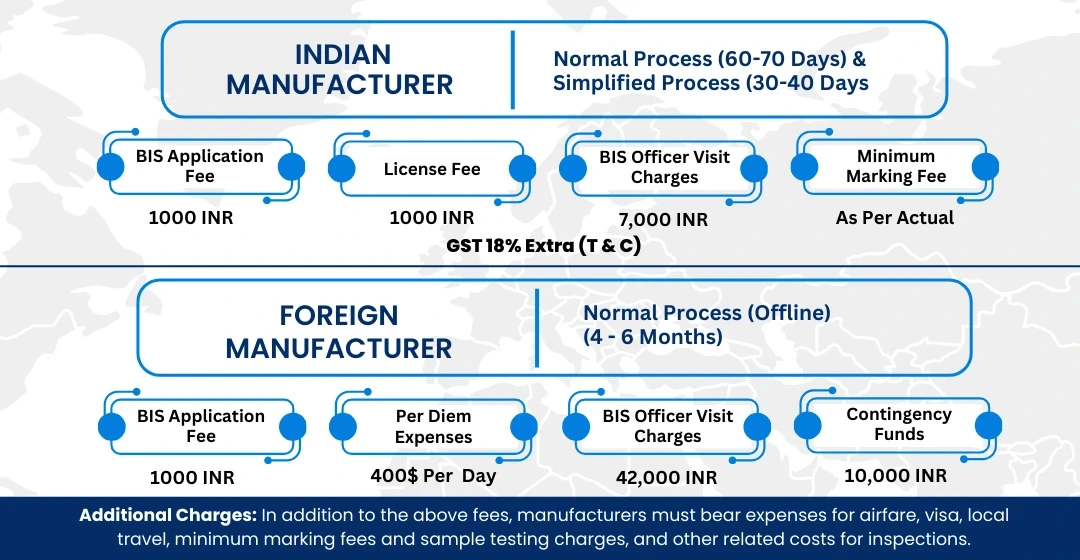
To Know The Process in Detail, Please Visit:
Under BIS Registration Products ISI and CRS
Conclusion
BIS certification
for Asbestos Cement Building Boards is essential to ensure adherence to quality
and safety standards as per IS 2098:1997. By complying with the mentioned
Quality control order, certified products provide reliable performance, enhance
consumer safety, and reinforce the credibility of manufacturers in the Indian
market.
Navigating the BIS certification process can be challenging, especially for small and medium-sized enterprises. EVTL India is a leading consultancy firm dedicated to assisting manufacturers in obtaining BIS certification (ISI Mark) efficiently. With expertise in managing BIS portal submissions, documentation, and regulatory fees, EVTL India ensures a smooth and successful certification process. By choosing EVTL India, manufacturers can enhance their product's marketability both in India and internationally, securing a competitive edge. Additionally, EVTL India provides ongoing support post-certification, helping manufacturers maintain compliance with BIS standards and renew their licenses as needed.