
BIS Certification for Electric Kettles and Jugs IS 367
In today’s fast-paced lifestyle,
electric kettles and jugs have become essential appliances in households,
offices, and hospitality settings. With their widespread use comes a critical
need to ensure electrical safety, quality, and performance. That’s where BIS
certification plays a key role.
To regulate product safety and protect consumers, the Bureau of Indian Standards (BIS) mandates compliance with IS 367, the Indian Standard for Electric Kettles and Jugs for household and similar use. This standard ensures that the products meet the necessary criteria for electrical insulation, heating efficiency, and user safety. Let’s take a closer look at IS 367, its importance, and the process of obtaining ISI certification for electric kettles and jugs.
Indian Standard IS 367
IS 367 is the Indian
Standard for electric kettles and jugs, which addresses their design,
construction, and safety requirements. This standard applies to electric
kettles and water jugs designed for boiling or heating water in household or
similar environments.
The standard outlines
essential performance, durability, and safety characteristics to ensure
protection against electric shock, safe operation under both normal and fault
conditions, fire resistance, thermal protection, and the durability of
switches, plugs, and cords. Compliance with IS 367 ensures that electric
appliances can operate safely, efficiently, and reliably under various usage
conditions.
Electric kettles and jugs
must meet several technical specifications outlined in IS 367, including:
1. Electrical Insulation: There should be no risk of electric shock during normal
or abnormal usage. The appliance must have high dielectric strength and proper
grounding.
2. Heating Element Safety: It must feature controlled heating mechanisms with auto
cut-off functions and should be resistant to overheating and dry boiling.
3. Thermal and Fire Safety: The outer body and components should withstand high
temperatures. Flame-retardant materials are preferred for enclosures.
4. Mechanical Durability: Switches, lids, handles, and bases must endure repetitive
usage. Hinges and joints are tested for breakage and fatigue.
5. Marking and Instructions: Products must be clearly marked with voltage, wattage, manufacturer name, and the ISI mark. Additionally, they should include safety instructions and operational guidelines.
Why ISI Certification for
Electric Kettles and Jugs is Important
1. Mandatory Compliance: As
part of the Compulsory Registration
Scheme (CRS) under BIS, manufacturers must obtain ISI certification for electric kettles and jugs before selling or
distributing them in India.
2. Consumer Safety: Poorly
manufactured or uncertified electric appliances pose serious risks such as
electric shocks, overheating, or even fire hazards. BIS-certified products meet
the minimum safety benchmarks, offering peace
of mind to consumers.
3. Legal Market Access: Only
products bearing the ISI Mark for
electric kettles and jugs can be legally sold in India. Non-compliance can
lead to penalties, product recalls, or bans.
4. Market Trust: Retailers, e-commerce platforms, and consumers increasingly prefer certified products. The ISI mark serves as a symbol of trust, quality, and safety assurance.
BIS Certification Process
for Electric Kettles and Jugs
Manufacturers must follow a
streamlined yet rigorous certification process through BIS to obtain the ISI
mark for electric kettles and jugs.
- Application
Submission: Submit the completed application
form with necessary documentation to BIS.
- Document Review: BIS evaluates the submitted documents to verify accuracy and
completeness.
- Factory Inspection: BIS officials conduct on-site inspections to assess
manufacturing processes and quality control systems.
- Sample Testing: Product samples are collected and tested at BIS-approved
laboratories to verify compliance with Indian standards.
- Certification Grant: Upon successful inspection and testing, the BIS issues the certification, allowing the use of the ISI Mark.

Documents Required for BIS Certification
To apply for ISI Certification for Fire Doors and Assembly, manufacturers must provide the following documents:
● Completed application form
● Detailed manufacturing process information
● Quality control plans and test reports
● Factory layout and equipment details
● Product specifications and technical details
● Business registration proof
● Declaration of conformity to Indian standards
Additional documentation may be required based on product specifications and environmental regulations.
BIS ISI Mark Certification Costing And Timeline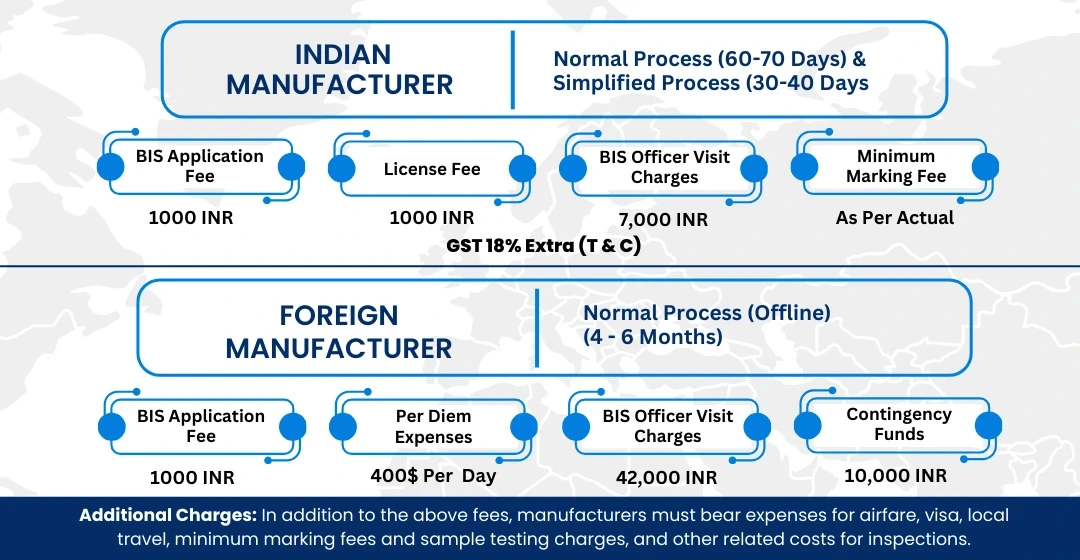
To Know The Process in Detail, Please Visit:
Under BIS Registration Products ISI and CRS
Conclusion
In an age where safety and efficiency
are paramount, BIS certification ensures that electric kettles and jugs meet
the required Indian Standard IS 367. For manufacturers, obtaining the ISI
certification for electric kettles and jugs is not just about legal
compliance—it's about delivering trustworthy, high-quality products to the
market.
By displaying the ISI mark, you signal
to your customers that your product stands for safety, reliability, and
excellence. Need help with ISI certification for your electric appliances? Our
experts can assist you with product testing, documentation, BIS audits, and
end-to-end certification. Get in touch today to start your compliance journey.