
BIS Certification for Locknuts and Locking Devices for Rolling Bearings IS 16605 (Part 2):2018
In the realm of rotating machinery,
rolling bearings play a pivotal role in ensuring smooth and efficient
operation. However, their performance is closely tied to the accessories that
hold them in place and prevent undesired motion. Among these accessories,
locknuts and locking devices serve a crucial function—they ensure proper axial
location and secure fastening of bearings and other machine elements to the
shaft.
Recognizing the importance of standardization in these components, the Bureau of Indian Standards (BIS) has introduced IS 16605 (Part 2):2018, a standard that mirrors the global benchmark ISO 2982-2:2013. This standard sets out the dimensional and design requirements for locknuts and locking devices used in conjunction with rolling bearings.
Understanding Locknuts and
Locking Devices in Bearing Systems
Locknuts, also referred to as shaft
nuts or bearing nuts, are threaded fasteners used to locate and secure bearings
onto shafts. These components are essential in applications where axial
movement must be prevented, such as in rotating shafts, gear assemblies,
pulleys, and belt-driven systems.
To prevent loosening under dynamic
loads or vibrations, locking devices are used in conjunction with locknuts.
These include components such as lock washers, retaining plates, or other
mechanical interlocking systems that secure the nut in position once it has
been tightened.
Locknuts and locking devices come in various sizes, thread types, and configurations depending on the specific bearing series, shaft size, and application requirements. Their correct selection and installation are critical for ensuring bearing alignment, reducing mechanical failure risks, and increasing equipment life.
IS 16605 (Part 2):2018 –
Scope and Significance
The Indian Standard IS 16605 (Part 2):2018, harmonized with
the international standard ISO
2982-2:2013, specifies the dimensions,
tolerances, and compatibility parameters for locknuts and locking devices
used with rolling bearings.
This standard covers:
By defining these specifications, IS 16605 (Part 2) ensures that locknuts and locking devices used in critical assemblies maintain structural integrity, safety, and ease of installation.
Regulatory Framework –
Bearing Components and Accessories (Quality Control) Order, 2025
To reinforce quality assurance and
eliminate substandard mechanical components from the Indian market, the Ministry of Commerce and Industry has
issued the Bearing Components and
Accessories (Quality Control) Order, 2025.
Under this order, locknuts and locking devices are listed among the mandatory
components that must conform to their respective Indian Standards, in this
case, IS 16605 (Part 2):2018.
Key Mandates
of the Order:
BIS Certification Process
for Locknuts and Locking Devices
BIS certification under this standard
involves a rigorous conformity assessment process to ensure product quality and
adherence to regulatory norms. The steps typically include:
- Filing an application to BIS with detailed product specifications, quality management system documents, and test reports.
- Factory inspection by BIS auditors to verify manufacturing capability, equipment, testing infrastructure, and quality controls.
- Product testing of locknuts and locking devices at BIS-recognized laboratories to confirm compliance with IS 16605 (Part 2):2018.
- Grant of BIS License upon successful audit and testing.
- Ongoing surveillance by BIS to ensure continued compliance through periodic inspections and testing of market samples.
To Know The Process in Detail, Please Visit:
Under BIS Registration Products ISI and CRS
Documents Required for BIS Certification

To apply for BIS certification, manufacturers need to submit the following documents:
● Application form
● Manufacturing process details
● Quality control plan
● Test reports from BIS-approved laboratories
● Factory layout and equipment details
● Proof of business registration
● Product specifications and technical details
● Declaration of conformity to Indian standards
Additionally, manufacturers may be required to provide proof of compliance with environmental and safety regulations, depending on the specific type of product being certified.
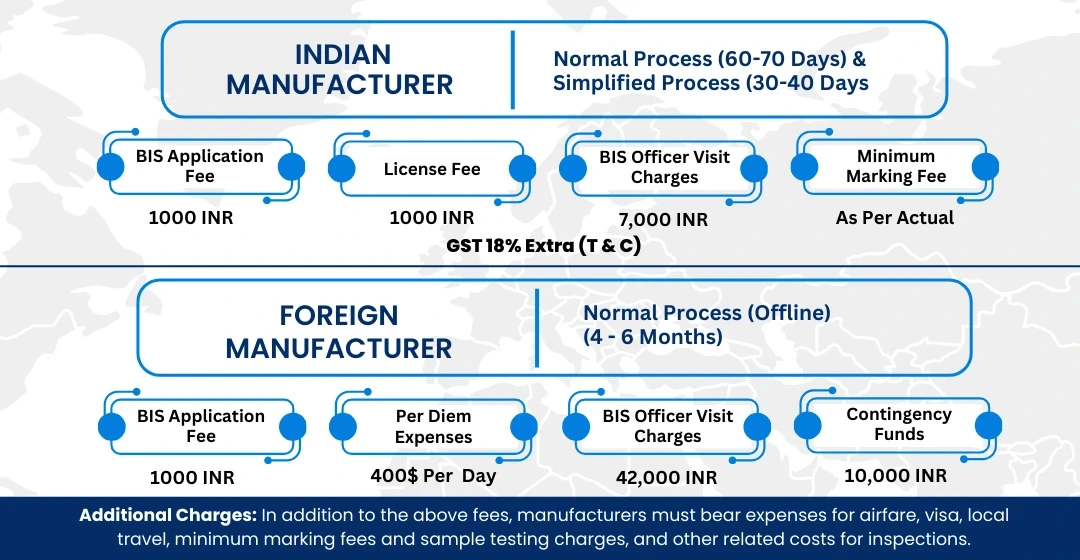
BIS ISI Mark Certification Costing And Timeline
Importance of BIS Certification
The BIS certification for locknuts and
locking devices offers a range of benefits for stakeholders across the supply
chain:
Ultimately, BIS certification fosters a culture of quality, safety, and accountability within the bearing components manufacturing ecosystem.
Conclusion
Locknuts and locking devices may be
small mechanical components, but their role in maintaining the stability and
precision of rolling bearing assemblies is irreplaceable. By complying with IS
16605 (Part 2):2018 / ISO 2982-2:2013, manufacturers not only align with
international best practices but also reinforce trust among industrial buyers
and end-users.
With the enforcement of the Quality
Control Order, 2025, BIS certification has become a non-negotiable requirement
for those involved in the production or import of these bearing accessories. As
India continues to elevate its manufacturing standards, such regulatory
measures will be key to ensuring product consistency and international
competitiveness.