
BIS Certification for Needle Rollers for Rolling Bearings IS 4217:2020
In the world of precision engineering,
needle roller bearings stand out for
their unique design and exceptional performance in compact spaces. At the core
of these bearings are needle rollers—slender,
cylindrical rolling elements that are critical to the functionality and
durability of the entire assembly.
These components are essential in applications where space is limited but performance cannot be compromised, such as in gearboxes, two-wheelers, automotive transmissions, machine tools, packaging machinery, and industrial automation systems.
Recognizing the importance of standardizing the quality and performance of needle rollers, the Bureau of Indian Standards (BIS) has specified detailed requirements under IS 4217:2020. This standard outlines the technical specifications, testing protocols, and quality parameters necessary for manufacturing needle rollers that meet the demands of modern industry.
Understanding the Role of
Needle Rollers
Needle rollers are distinguished by
their small diameter-to-length ratio,
which gives them a “needle-like” appearance. Despite their slender design,
these rollers are capable of handling high
radial loads due to the increased contact area they provide within the
bearing assembly. This makes them ideal for applications where conventional
cylindrical rollers would not fit.
These rollers must be manufactured to high degrees of accuracy in terms of dimensions, roundness, surface finish, and hardness. Even minor deviations can significantly affect bearing performance, leading to premature wear, noise, or failure.
IS 4217:2020 – Standard
Specifications for Needle Rollers
The Indian Standard IS 4217:2020, developed by BIS,
specifies the characteristics and performance requirements for needle rollers
used in rolling bearings. It serves as a national benchmark and aligns with
international practices to ensure consistency, reliability, and compatibility
in global and domestic supply chains.
Key aspects addressed by the standard
include:
By complying with IS 4217:2020, manufacturers can assure the mechanical precision and functional reliability of needle rollers used in high-stress applications.
Mandatory BIS
Certification Under Quality Control Order, 2025
To regulate the quality of rolling
bearing components in India, the Ministry of Commerce and Industry has
introduced the Bearing Components and Accessories (Quality Control) Order,
2025. As per this order, manufacturers, importers, and suppliers must ensure that
needle rollers for rolling bearings conform to IS 4217:2020 and are certified
by the Bureau of Indian Standards.
Under this regulation:
This move not only raises the bar for product quality and safety but also helps protect industries and end-users from substandard or counterfeit components.
BIS Certification Process for Needle Rollers

- Application Submission: The manufacturer submits a detailed application with technical documents and quality assurance plans.
- Factory Audit: BIS officials inspect the manufacturing facility to assess the production process, quality control systems, and testing infrastructure.
- Product Sampling and Testing: Samples are taken for evaluation at BIS-recognized laboratories. The products are tested for dimensional accuracy, surface characteristics, hardness, and performance benchmarks.
- License Grant: If the product meets all requirements, BIS grants a license, allowing the use of the ISI mark.
- Ongoing Surveillance: The certified facility undergoes regular audits and surveillance to maintain certification.
This rigorous approach ensures that only compliant products enter the market, offering consistent performance and long-term reliability.
To Know The Process in Detail, Please Visit:
Under BIS Registration Products ISI and CRS
Documents Required for BIS Certification
To apply for BIS certification, manufacturers need to submit the following documents:
● Application form
● Manufacturing process details
● Quality control plan
● Test reports from BIS-approved laboratories
● Factory layout and equipment details
● Proof of business registration
● Product specifications and technical details
● Declaration of conformity to Indian standards
Additionally, manufacturers may be required to provide proof of compliance with environmental and safety regulations, depending on the specific type of product being certified.
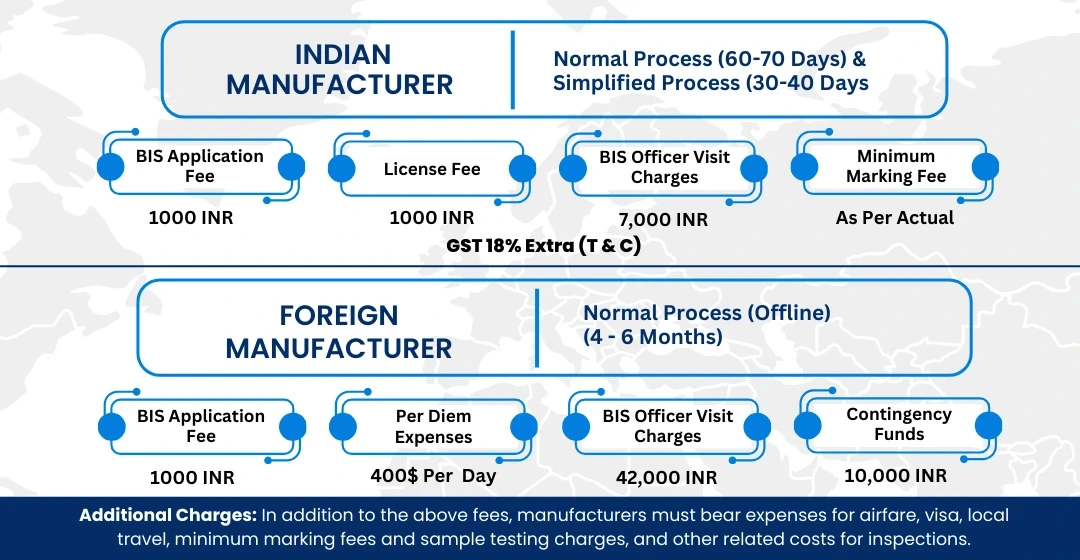
BIS ISI Mark Certification Costing And Timeline
Importance of Certification for Industry Stakeholders
For manufacturers, BIS certification
under IS 4217:2020 provides a competitive advantage by demonstrating compliance
with national standards and enhancing trust with clients. It facilitates access
to government tenders, industrial supply chains, and international markets.
For end-users, OEMs, and system integrators, the ISI mark guarantees that the needle rollers they use are tested for precision, strength, and durability, reducing the risk of operational failure and maintenance costs.
Conclusion
Needle rollers may appear simple, but
their performance directly influences the reliability of critical mechanical
systems. With the implementation of IS 4217:2020 and its mandatory
certification under the Quality Control Order, 2025, India is taking a major
step toward ensuring the quality, safety, and global competitiveness of its
engineering components.
Whether you are a manufacturer seeking
certification or an industry buyer sourcing reliable components, BIS compliance
is not just a regulatory need—it is a quality assurance that defines the future
of precision engineering in India.