
BIS Certification for Steel Used in Internal Combustion Engine Valves IS 7494:1981
In the heart of every internal
combustion engine lies a set of components that endure some of the harshest
operational conditions imaginable. Among them, engine valves play a critical
role, managing the intake of fuel and air and the expulsion of exhaust gases.
The performance, reliability, and lifespan of these valves are directly tied to
the quality of steel used in their manufacturing.
Recognizing the technical demands of valve components, the Bureau of Indian Standards (BIS) introduced IS 7494:1981, a standard that governs the specifications for wrought alloy and unalloyed steel bars intended for the production of internal combustion engine valves. This standard is part of India’s broader regulatory framework for automotive safety, quality, and compliance.
The Role of Steel in
Engine Valve Manufacturing
Valves used in internal combustion
engines must endure high thermal loads, mechanical stress, rapid opening and
closing cycles, and corrosive combustion gases. To handle these challenges,
manufacturers use special grades of steel known for their heat resistance,
strength, and fatigue endurance. Some of the commonly used materials include:
The manufacturing process typically involves forging, machining, and heat treatment to enhance the microstructure and properties of the steel. Ensuring the steel meets specific metallurgical and mechanical standards is essential, and that’s where IS 7494:1981 plays a pivotal role.
Overview of IS 7494:1981
Titled "Steel for Internal Combustion Engine Valves – Specification",
IS 7494:1981 applies to wrought alloyed and unalloyed steel bars up to 40 mm in
diameter used in valve production. It sets forth minimum requirements for
chemical composition, mechanical strength, surface quality, and heat treatment
conditions, among other parameters.
This standard ensures that the steel used in valve manufacturing is not only capable of withstanding engine environments but also consistent in performance across different production batches. It is now a mandatory certification under the Steel and Steel Products (Quality Control) Order, 2024, requiring all such steel products manufactured, sold, or imported in India to be ISI-marked.
Key Provisions of the
Standard
The IS 7494:1981 standard covers
various aspects of the material and its preparation, including:
Essential Tests Performed
for BIS Certification
BIS certification under IS 7494:1981
involves comprehensive material testing
to verify compliance with the standard’s specifications. Some of the crucial
tests include:
All these tests are conducted at BIS-recognized laboratories using standardized methods to maintain consistency and reliability.
Importance of BIS
Certification for Engine Valve Steel
Obtaining BIS certification under IS
7494:1981 is mandatory for
manufacturers, importers, and suppliers of engine valve steel in India. It
ensures:
For manufacturers, this certification is also a mark of quality assurance and market credibility in a competitive and regulation-driven environment.
Certification Process

- Filing an application with BIS
- Product testing at a BIS-approved laboratory
- Factory audit and inspection by BIS officials
- Evaluation of results and grant of certification
- Regular surveillance audits to maintain certification validity
Manufacturers must also implement a robust quality management system and maintain test records for each production batch.
To Know The Process in Detail, Please Visit:
Under BIS Registration Products ISI and CRS
Documents Required for BIS Certification
To apply for BIS certification, manufacturers need to submit the following documents:
● Application form
● Manufacturing process details
● Quality control plan
● Test reports from BIS-approved laboratories
● Factory layout and equipment details
● Proof of business registration
● Product specifications and technical details
● Declaration of conformity to Indian standards
Additionally, manufacturers may be required to provide proof of compliance with environmental and safety regulations, depending on the specific type of product being certified.
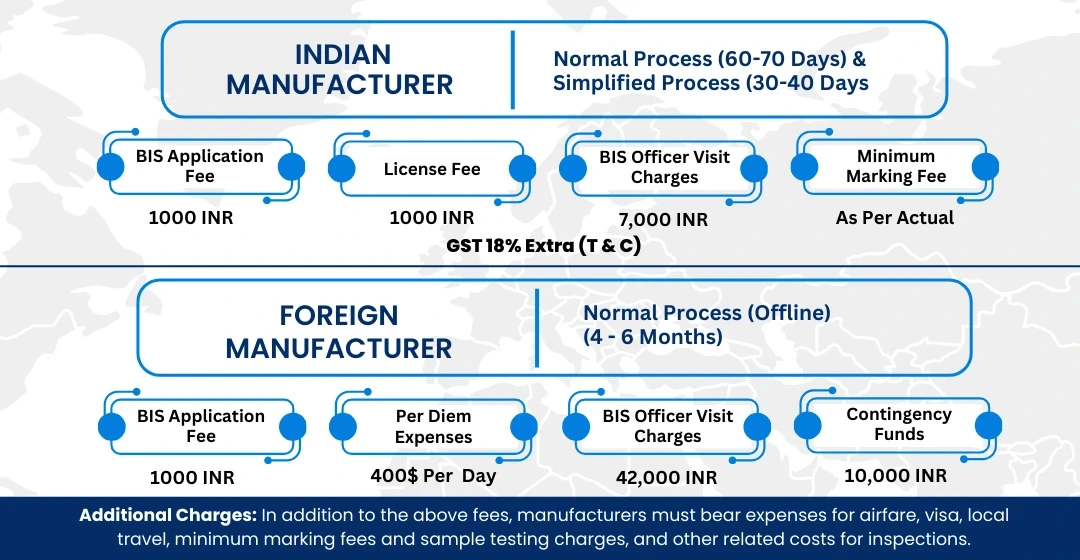
BIS ISI Mark Certification Costing And Timeline
Conclusion
Steel used in internal combustion
engine valves must meet the highest standards of performance, durability, and
heat resistance. The BIS certification under IS 7494:1981 ensures that only
high-quality steel bars, free from defects and compliant with mechanical and
chemical standards, are used in manufacturing these critical components.
With regulatory compliance becoming
increasingly stringent, BIS certification is not only a legal requirement but
also a commitment to product quality, safety, and reliability. It offers
assurance to automotive OEMs, suppliers, and end-users that the materials used
in engine valve manufacturing meet rigorous Indian standards.