
BIS Certification for Tin Ingot IS 26:2024
Tin Ingot plays a vital role in
various industries such as electronics, packaging, soldering, and plating. With
increasing industrial applications and the need for consistent quality, the
Indian government has taken steps to ensure that only standardized and
high-grade tin ingots are manufactured, sold, or imported in the country. The
most significant among these steps is the implementation of the BIS
certification for Tin Ingot.
Let’s explore the importance of this certification, recent regulatory changes, and what manufacturers must do to comply with the Indian Standard for Tin Ingot (IS 26:2024).
Tin Ingot (Quality
Control) Order, 2025
To strengthen product quality and
protect end-users, the MINISTRY OF MINES issued the Tin Ingot (Quality Control)
Order, 2025. This order mandates that all manufacturers of Tin Ingot obtain BIS
certification.
As per the order, all certified
products must bear the Standard Mark (ISI mark), issued under a license by the
Bureau of Indian Standards (BIS) according to Scheme-1 of Schedule-II of the
BIS (Conformity Assessment) Regulations, 2018.
This regulation aims to eliminate substandard or non-compliant tin ingots from the supply chain, enhancing overall product integrity across industries.
Also Read
BIS QCO for Tin IngotWhat is BIS Certification
for Tin Ingot?
The BIS certification for Tin Ingot is
a quality assurance mark granted by the Bureau of Indian Standards. It confirms
that the ingots meet the technical specifications and safety norms set out in
the Indian Standard IS 26:2024.
Once certified, manufacturers are authorized to label their products with the ISI mark, which serves as a mark of trust, quality, and compliance for consumers and businesses alike.
Indian Standard for Tin
Ingot IS 26:2024
The Indian Standard for Tin Ingot (IS
26:2024) outlines the essential quality parameters for refined tin ingots.
These include:
Adhering to IS 26:2024 ensures the tin ingots are fit for use in sensitive and performance-critical applications.
Why ISI Certification for
Tin Ingot Matters
Obtaining ISI certification for Tin Ingot is not just a legal obligation, but
also a strategic advantage for manufacturers:
Steps to Obtain BIS
Certification for Tin Ingot
Obtaining BIS certification for Tin
Ingot involves the following steps:
- Application
Submission: Submit the completed application
form with necessary documentation to BIS.
- Document Review: BIS evaluates the submitted documents to verify accuracy and
completeness.
- Factory Inspection: BIS officials conduct on-site inspections to assess
manufacturing processes and quality control systems.
- Sample Testing: Product samples are collected and tested at BIS-approved
laboratories to verify compliance with Indian standards.
- Certification Grant: Upon successful inspection and testing, the BIS issues the certification, allowing the use of the ISI Mark.

Documents Required for BIS Certification
To apply for BIS certification, manufacturers need to submit the following documents:
● Application form
● Manufacturing process details
● Quality control plan
● Test reports from BIS-approved laboratories
● Factory layout and equipment details
● Proof of business registration
● Product specifications and technical details
● Declaration of conformity to Indian standards
Additionally, manufacturers may be required to provide proof of compliance with environmental and safety regulations, depending on the specific type of product being certified.
BIS ISI Mark Certification Costing And Timeline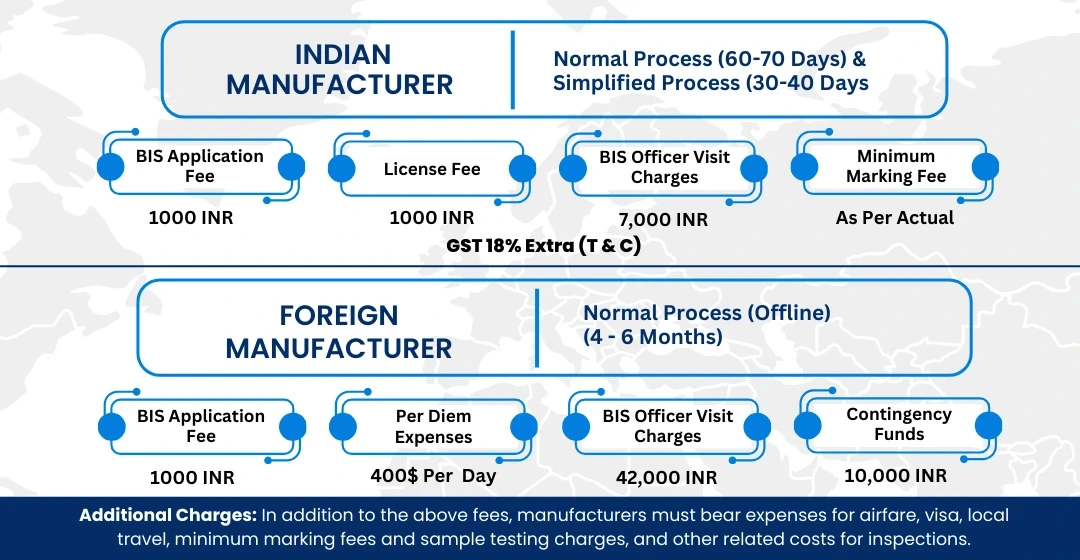
To Know The Process in Detail, Please Visit:
Under BIS Registration Products ISI and CRS
Conclusion
With the enforcement of the Tin Ingot
(Quality Control) Order, 2025, obtaining the BIS certification for Tin Ingot
has become mandatory for manufacturers operating in India. Aligning with the
Indian Standard for Tin Ingot (IS 26:2024) and acquiring the ISI mark
certification will not only ensure compliance but also enhance credibility,
consumer trust, and market access.
Whether you're a new entrant or an
established player in the tin industry, prioritizing certification is crucial
for long-term success in an increasingly regulated and quality-driven
marketplace.