
BIS Certification for Welded and Seamless Steel Dissolved Acetylene Gas Cylinders– IS 7312
Dissolved acetylene gas cylinders, made
from welded or seamless steel, are used for safely storing and transporting
acetylene gas in various industrial applications, including welding and
cutting. Under IS 7312, these cylinders must meet strict standards to ensure
their structural integrity and safe handling. BIS certification under this
standard verifies that the cylinders are manufactured with high-quality steel and
adhere to rigorous safety protocols, reducing risks of leakage, rupture, and
fire.
The Bureau of Indian Standards (BIS) requires dissolved acetylene gas cylinders to comply with IS 7312, covering both welded and seamless steel constructions. This standard mandates specific guidelines to safeguard the handling and storage of acetylene gas, focusing on material quality, pressure resistance, and leak prevention. BIS certification, symbolized by the ISI mark, confirms the safety and quality of these cylinders, essential for high-risk environments.
Why is BIS Certification Necessary for Dissolved Acetylene Gas Cylinders?
Acetylene gas cylinders present unique hazards, as acetylene is highly flammable and sensitive to pressure changes. BIS certification ensures that cylinders meet the safety requirements of IS 7312, including proper construction and leak prevention. This certification minimizes the risk of accidents during transport and usage, providing users with a safe and dependable gas containment option for critical applications.
Overview of Indian Standard IS 7312
Indian Standard IS 7312 sets safety and
performance requirements for acetylene gas cylinders, emphasizing key factors
such as material strength, leak prevention, and durability. The standard
mandates the use of high-quality welded or seamless steel to ensure structural
integrity under high pressure. It also requires rigorous sealing processes and
testing to prevent leaks, while specifying corrosion-resistant materials to
enhance cylinder lifespan. Additionally, IS 7312 ensures that cylinders can
withstand designated pressure levels and endure heat exposure, providing a
reliable and safe solution for storing and transporting acetylene gas.
Process for BIS Certification

The BIS certification process for dissolved acetylene cylinders under IS 7312 includes:
- Application Submission: Manufacturers submit detailed
documentation and technical specifications of the cylinders.
- Document Review: BIS reviews these documents to ensure
compliance with IS 7312.
- Factory Inspection: BIS inspects manufacturing facilities
to assess the production process and quality control measures.
- Sample Testing: Cylinder samples undergo testing in
BIS-accredited labs to verify they meet safety standards.
- Certification Approval: Successful testing and inspection
lead to certification, allowing manufacturers to use the ISI mark on their
cylinders.
To Know The Process in Detail, Please Visit:
Under BIS Registration Products ISI and CRS
Documents Required for BIS Certification
To apply for BIS certification, manufacturers need to submit the following documents:
● Application form
● Manufacturing process details
● Quality control plan
● Test reports from BIS-approved laboratories
● Factory layout and equipment details
● Proof of business registration
● Product specifications and technical details
● Declaration of conformity to Indian standards
Additionally, manufacturers may be required to provide proof of compliance with environmental and safety regulations, depending on the specific type of product being certified.
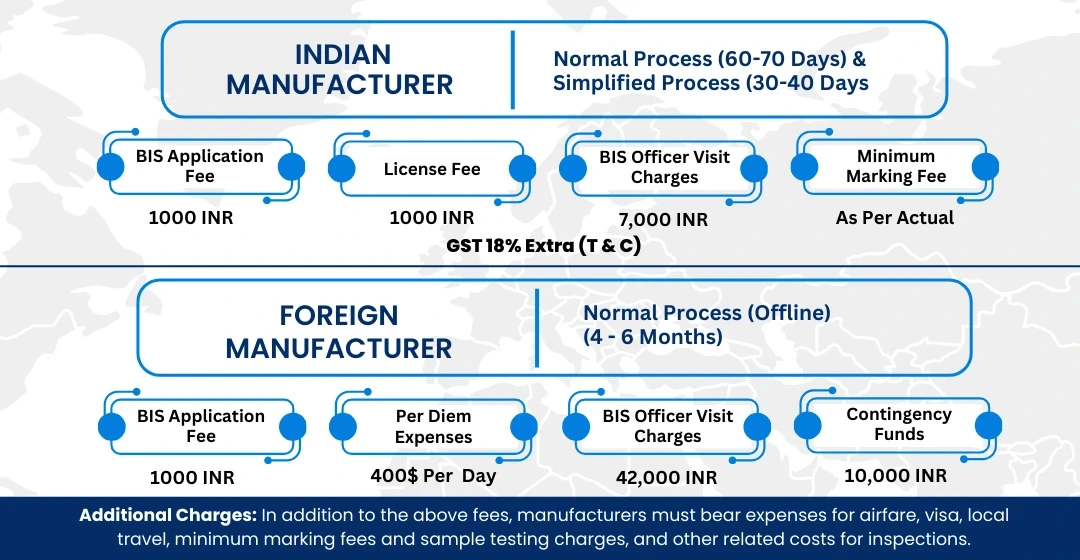
BIS ISI Mark Certification Costing And Timeline
Conclusion
Compliance with IS 7312 is essential for
manufacturers of acetylene gas cylinders, providing assurance of safety and
reliability in high-risk environments. BIS certification confirms the adherence
to critical safety standards, reducing risks associated with handling dissolved
acetylene gas. EVTL India offers comprehensive consultancy services to
streamline the certification process, helping manufacturers achieve BIS
compliance under IS 7312 and enhance product safety and market readiness.